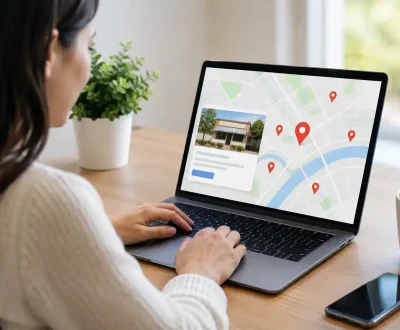
A homeowner searches for a roofer, sees your Google Business Profile, visits two service pages, leaves, then calls three days later after finding your company again in a map result. Without website analytics, that call can look like a mystery. With the right tracking in place, it becomes evidence of what is working and where the next marketing dollar should go.
For local businesses, analytics is not about collecting a larger pile of website numbers. It is about connecting online visibility to qualified calls, estimate requests, appointments, and booked work. A beautiful website and strong rankings matter, but business owners also need to know whether those investments are producing real opportunities.
What Website Analytics Should Tell Your Business
The most useful analytics setup answers practical questions. Which marketing channels bring in leads? Which services are people researching? Which locations generate the strongest demand? Where do visitors stop before they contact you? These answers help a Jacksonville business make better decisions about its website, search optimization, Google Ads, local visibility, and content.
Traffic alone is rarely a meaningful success metric. A landscaping company may see a large increase in blog traffic while receiving no additional estimate requests. Meanwhile, a smaller number of visitors landing on its drainage, sod installation, or commercial maintenance pages may generate the calls that become profitable jobs. The goal is to identify the sources and pages that create business value, not simply attention.
A clear reporting system should connect the full path as closely as possible: search or ad impression, website visit, service-page engagement, call or form submission, follow-up, and ideally a closed sale. Not every step can be captured perfectly, especially when a prospect calls directly or visits multiple devices. But a well-built measurement plan provides far more clarity than guessing from monthly traffic totals.
Start With Conversion Actions
Before reviewing dashboards, define what counts as a conversion for your operation. For many service businesses, that includes phone calls, contact forms, quote requests, appointment bookings, chat conversations, and clicks to directions. A law firm may prioritize consultation submissions. A restaurant may care about online reservations, menu views, and catering inquiries. A nonprofit may track donations, volunteer forms, and event registrations.
Not all conversions have the same value. A click on a phone number indicates interest, but a connected call lasting several minutes may be a stronger lead signal. A general contact form might produce mixed-quality inquiries, while a request for a specific service in a defined service area could be highly valuable. When possible, organize conversion reporting by lead quality rather than treating every action as equal.
The Metrics That Actually Support Growth
A business does not need to monitor every available metric. It needs a focused group of measures that reveal whether visibility is turning into opportunity. The following metrics are particularly useful when reviewed together:
- Qualified conversions: Calls, forms, bookings, and other actions that represent genuine sales opportunities.
- Conversion rate: The percentage of visitors who take a desired action. This shows whether traffic is relevant and whether the site makes contacting you easy.
- Channel performance: Leads and conversion rates from organic search, paid search, Google Business Profile, social media, referrals, and direct visits.
- Service-page performance: Which pages attract high-intent visitors and which pages need clearer messaging, stronger proof, or better calls to action.
- Local visibility signals: Google Business Profile calls, website clicks, direction requests, review trends, and Map Pack performance for priority services and areas.
These numbers need context. A lower conversion rate is not always bad if a new awareness campaign is bringing in people earlier in their buying process. Likewise, a high conversion rate can be misleading if the total number of leads is too low to support growth. Review volume, quality, and cost together.
Track the Channels That Work Together
Local customers do not always convert in one visit. Someone may first discover your business through an organic search result, read reviews on your Google Business Profile, return through a branded search, and call from their phone. Assigning all credit to the final visit can understate the value of SEO, content, reputation management, and map visibility.
That is why channel reporting should be interpreted as a connected system. Google Analytics 4 can show how visitors arrive and behave on the website. Google Search Console can reveal search queries, impressions, and click-through rates. Google Business Profile insights can show calls, direction requests, and website visits from local search. Call tracking and customer relationship management data can help connect leads to sales outcomes.
Each platform sees only part of the customer journey. Bringing those parts into a consistent monthly view creates a more accurate picture of marketing performance.
Website Analytics Can Reveal Conversion Friction
Analytics is especially valuable when traffic is present but leads are inconsistent. A service page may rank well and receive steady visits, yet generate few inquiries. The issue might be the offer, page speed, confusing navigation, weak trust signals, or a form that asks for too much information.
Review how visitors move through important pages. Are they reaching the contact section? Are mobile users clicking the phone number? Do visitors leave after encountering an unclear pricing message or a slow-loading image gallery? These patterns point to specific improvements rather than broad redesign decisions based on opinion.
For example, an HVAC company may find that its emergency repair page receives substantial mobile traffic after business hours, but its primary call button is buried below a large banner. Moving the call action higher, adding service-area reassurance, and displaying after-hours availability could materially improve lead capture without changing the entire site.
Analytics can also expose gaps in local relevance. If visitors from Ponte Vedra or St. Johns frequently leave a service page without converting, the page may not clearly explain coverage, response times, or the services available in those areas. Location-specific content should be useful and accurate, not copied pages with city names swapped out.
Build a Measurement Plan Before Adding More Tools
More software does not automatically create better reporting. A focused measurement plan is more valuable than a crowded dashboard full of unverified data. Start by identifying your primary business goal, such as increasing qualified roofing estimates, booked pest-control services, or consultations for a professional practice.
Then establish the conversion actions that support that goal and confirm they are tracked correctly. Test form submissions, phone-click events, booking links, and thank-you pages. Make sure internal staff testing does not distort reports. If calls are tracked, review recordings or call outcomes within privacy and consent requirements so short wrong-number calls are not reported as sales leads.
Next, set reporting intervals that fit the business. Paid campaigns may need weekly attention because budgets can be adjusted quickly. SEO and local search often require monthly and quarterly review because rankings, content performance, reviews, and authority signals develop over time. Seasonal businesses should compare results with the same period last year, not just the prior month.
Protect Data Quality and Customer Privacy
Reliable decisions require reliable data. Common problems include duplicate tracking tags, forms that do not trigger conversion events, campaign links without proper labels, and traffic from spam or internal users. A periodic analytics audit can catch these issues before they influence budget decisions.
Privacy also matters. Use consent practices appropriate for your market and the tools on your site. Avoid collecting more personal information than needed, and make sure sensitive lead details are handled responsibly. Measurement should support better service and marketing, not create unnecessary risk.
Measuring Search Visibility Beyond Traditional Results
Search behavior is changing. Customers still use Google results and the Map Pack, but they are also asking AI-powered answer tools for recommendations, comparisons, and service guidance. That makes clear site structure, accurate service information, trusted reviews, and structured data more valuable.
AI search referrals may be limited or inconsistently labeled in analytics, so measurement requires perspective. Watch for changes in branded searches, referral patterns, service-page engagement, and lead quality alongside traditional ranking data. Generative engine optimization is not a replacement for sound local SEO. It builds on the same foundation: useful content, technically healthy pages, credible business information, and signals that support trust.
Turn Reporting Into Better Decisions
The final step is where many businesses lose momentum. A monthly report should lead to a decision, not sit unread in an inbox. If a service page attracts high-intent traffic but does not convert, improve the page. If paid search produces calls that do not become jobs, refine keywords, targeting, and ad messaging. If Google Business Profile activity rises after new reviews and photos are added, continue that work consistently.
Kelly Advantage approaches reporting as a way to make marketing accountable to business goals. The right numbers should help you decide what to expand, what to fix, and what to stop funding.
Your website is often the point where local visibility becomes a real conversation with a prospective customer. When analytics is configured around that moment, it gives your team a practical advantage: fewer assumptions, clearer priorities, and more confidence in the work that brings the next qualified lead.
About us and this blog
We are a digital marketing company with a focus on helping our customers achieve great results across several key areas.
Request a free quote
We offer professional SEO services that help websites increase their organic search score drastically in order to compete for the highest rankings even when it comes to highly competitive keywords.
Subscribe to our newsletter!
More from our blog
See all posts