A website that looks polished but cannot generate calls, quote requests, appointments, or booked jobs is not a growth asset. For local businesses weighing WordPress versus custom websites, the right choice is rarely about which platform is more impressive. It is about selecting the foundation that supports your sales process, search visibility, team capacity, and plans for growth.
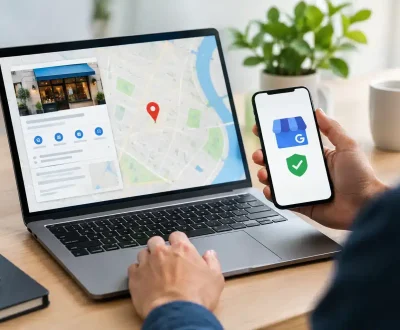
For a Jacksonville roofing company, law firm, landscaping business, or home service provider, the website must do more than display services. It needs to load quickly, make it easy to contact you, establish credibility, support Google Maps visibility, and give search engines and AI-powered answer platforms clear information about what you do and where you work.
What “Custom Website” Actually Means
The phrase “custom website” can cause confusion because WordPress websites can also be custom designed. A custom WordPress website may have an original design, tailored page templates, custom service-area content, and carefully built conversion paths. It simply uses WordPress as the content management system behind the scenes.
A fully custom website usually means the site is built with a bespoke codebase or a specialized framework rather than a traditional CMS template structure. Its features, admin tools, integrations, and frontend are designed around a specific business need.
That distinction matters. The real decision is not always WordPress or custom design. More often, it is a well-built WordPress site with appropriate customization versus a fully bespoke application that requires custom development for nearly every change.
When WordPress Is the Better Business Choice
WordPress is a practical fit for many small and midsize businesses because it balances professional presentation with flexibility. A capable development team can build an original, fast, conversion-focused site without forcing the business owner to depend on a programmer for every new service page, team bio, project gallery, or article.
For organizations that publish regular content, promote seasonal services, add project photos, or manage multiple locations, that control has real value. Your staff or marketing partner can keep the site current, which helps both customer trust and organic search performance.
WordPress also supports the core elements local businesses need to compete: location pages, service pages, contact forms, review displays, event information, schema markup, analytics, and integration with call tracking or customer relationship management systems. When properly configured, it can provide a strong technical foundation for SEO, local SEO, and generative engine optimization.
The WordPress advantage for local SEO
Search visibility depends on much more than the platform. Still, WordPress makes it straightforward to maintain the structured, useful information search engines need. A business can create clear pages for each major service, explain service areas accurately, publish helpful FAQs, add photos, and keep its contact details consistent with its Google Business Profile.
Structured data can identify your business, services, service areas, reviews, FAQs, and location details in a format that search systems can interpret. This supports better eligibility for rich results and helps AI-driven search tools understand the context of your company. The goal is not to add technical markup for its own sake. The goal is to make your business easier to find and easier to trust.
Where WordPress can go wrong
WordPress is not automatically fast, secure, or search-friendly. Problems typically come from overloaded themes, unnecessary plugins, weak hosting, outdated software, or a site assembled without a strategy.
A low-cost, prebuilt theme may look acceptable at launch but introduce code bloat, inconsistent mobile layouts, slow load times, and difficult updates. Too many plugins can create compatibility problems and expand the site’s security risk. A neglected WordPress installation can also become a liability.
That is why WordPress should be treated as a managed business platform, not a one-time purchase. Quality hosting, software updates, backups, security monitoring, performance checks, and ongoing content improvements all protect the investment.
When a Fully Custom Website Makes Sense
A fully custom build is justified when the website must perform functions that standard CMS tools cannot handle efficiently. This is common when a business needs a proprietary client portal, advanced quoting logic, complex scheduling rules, inventory synchronization, membership access, a multi-step application workflow, or deep integration with internal systems.
For example, a specialized technical company may need customers to configure equipment, generate detailed specifications, and submit a request that connects to an internal operations system. A custom application can be designed around that workflow instead of trying to force it into plugins that were never intended to work together.
Custom development also gives greater control over code, database design, performance decisions, and security architecture. For an organization with a large digital operation or unusual compliance requirements, that level of control may be worth the added investment.
The trade-off is cost and dependency. A bespoke site generally takes longer to plan, build, test, and improve. Future changes may require the original developer or another team that can understand the custom codebase. If a business only needs brochure pages, service information, lead forms, and occasional content updates, a custom application can be more technology than the situation requires.
WordPress Versus Custom Websites: Cost Beyond Launch
Launch pricing is only one part of the equation. A cheaper project that produces few leads, cannot be updated quickly, or needs to be replaced in two years is not necessarily economical. Likewise, a costly custom build is difficult to justify if most of its functionality goes unused.
WordPress usually delivers a lower initial cost and faster time to market. It benefits from established tools, editorial controls, and a large ecosystem of experienced designers, developers, and marketing professionals. Ongoing costs include hosting, maintenance, premium software licenses where needed, security, and optimization work.
Custom websites have a higher upfront development cost because more decisions and components must be created specifically for the business. Maintenance can also be more specialized. However, a custom solution may reduce operational friction and create a better return when it replaces manual processes or supports a distinctive customer experience.
The right question is: what business result will the added investment produce? If custom functionality can reduce labor, increase close rates, improve customer retention, or create a meaningful competitive advantage, it may earn its cost. If not, the budget may produce better returns through conversion-focused design, local SEO, paid search, Google Business Profile management, and ongoing content.
Performance, Ownership, and Flexibility
Both options can perform exceptionally well. A professionally developed WordPress site can be fast, mobile-friendly, accessible, and technically clean. A poorly planned custom site can be slow and difficult to use. Platform labels do not guarantee quality.
Ownership deserves close attention in either direction. Your business should retain access to its domain, hosting account, analytics, source files, content, and key marketing data. Before signing off on a project, ask how updates will be handled, what happens if you change providers, how backups are stored, and whether your team can export content.
Flexibility also has two meanings. WordPress offers flexibility for ordinary marketing changes: adding a page, updating copy, publishing an article, or launching a new service. Fully custom systems offer flexibility for unusual business processes, provided you budget for continued development. One is not universally better. They solve different forms of change.
Choose Based on Your Growth Plan
For most local service businesses, professional firms, nonprofits, and growing organizations, a custom-designed WordPress website is the most sensible starting point. It can look distinctive, support advanced SEO, integrate with lead-generation tools, and evolve as services and markets change. The key is avoiding the false choice between a generic template and expensive custom code.
A fully custom website is the stronger option when your website is central to delivering the service itself or when it must connect sophisticated workflows that a conventional CMS cannot manage reliably. That decision should come from documented operational requirements, not from the assumption that custom code automatically creates a better website.
Before choosing either path, map the actions you need visitors to take, the information they need before contacting you, and the systems your team uses after a lead arrives. Then build the site around those moments. A website earns its place in your marketing budget when it gives the right prospect a clear reason and an easy way to take the next step.
About us and this blog
We are a digital marketing company with a focus on helping our customers achieve great results across several key areas.
Request a free quote
We offer professional SEO services that help websites increase their organic search score drastically in order to compete for the highest rankings even when it comes to highly competitive keywords.
Subscribe to our newsletter!
More from our blog
See all posts