A Jacksonville homeowner searching for a roofer may see a Google Map Pack, paid listings, organic results, review snippets, and an AI-generated answer before ever reaching a traditional results page. That is the practical reality of future local search: visibility is no longer limited to ranking a website for one keyword. Businesses must provide enough accurate, trusted information for search platforms to confidently recommend them.
For local service businesses, the stakes are straightforward. If customers cannot find clear proof that you serve their area, perform the work they need, and have earned positive experiences from real clients, the call often goes to a competitor. The businesses that win will not necessarily publish the most content. They will make it easiest for Google, AI search tools, and prospective customers to understand why they are the right local choice.
The Future Local Search Journey Is Fragmented
A local search used to follow a relatively predictable path: a customer typed a service into Google, reviewed a few websites, and made a call. That still happens, but the journey now branches across more surfaces.
A customer may search "pest control near me" on a phone and call directly from a Google Business Profile. Another may ask an AI assistant which Jacksonville landscaping companies handle drainage problems. A third may compare ratings, photos, service details, and responses to reviews in Maps before visiting any company website.
Each interaction is a chance to earn a lead, but it also creates more ways to lose one. An outdated phone number, a thin service page, inconsistent business hours, or a lack of recent reviews can weaken trust at the exact moment a buyer is ready to act.
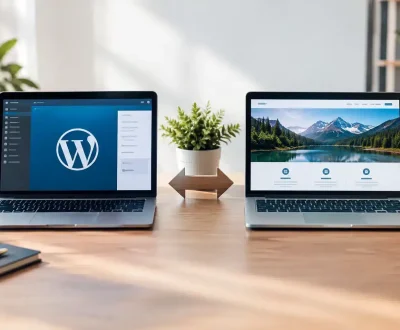
The shift does not mean websites are less important. A well-built website remains the home base for your brand, service information, proof of experience, and conversion paths. What has changed is that your website must work with your Google Business Profile, reviews, local citations, paid campaigns, and structured data rather than operating as a separate marketing asset.
Local Relevance Must Be Specific
Search engines have become much better at interpreting intent. They do not only match a search phrase to a page. They look for signals that show whether a business is relevant to a particular need, neighborhood, and moment.
For example, a law firm that serves St. Johns County should not rely on a single generic page that says it handles legal services across Northeast Florida. Search platforms and prospective clients need more context: the practice areas offered, the types of cases accepted, locations served, attorney credentials, client feedback, and helpful answers to common questions.
The same principle applies to contractors, home service providers, and professional firms. A roofing company may want visibility for roof repair, replacement, storm damage inspections, and commercial roofing. Those are distinct needs with different customer questions. Clear service pages, project examples, photos, FAQs, and location details make it easier to connect the right search to the right business.
There is a trade-off. Creating a page for every nearby city without meaningful local information can create weak, repetitive content. Effective local SEO prioritizes useful coverage over volume. A location page should explain the service, establish genuine service-area relevance, and help a customer take the next step.
Proximity Still Matters, but It Is Not the Whole Story
For Google Maps results, proximity remains a major factor. A business cannot optimize its way into being physically closest to every searcher. However, proximity works alongside relevance and prominence.
Relevance comes from complete business categories, accurate services, well-organized website content, and consistent business information. Prominence grows through strong reviews, local authority, recognizable brand signals, quality links and citations, and evidence that customers choose your business. A company farther away may still appear when it demonstrates a better fit for the search.
That is why local visibility requires more than changing a few keywords. It requires a system that supports credibility across the places customers and platforms use to evaluate you.
Google Business Profile Is Becoming a Conversion Asset
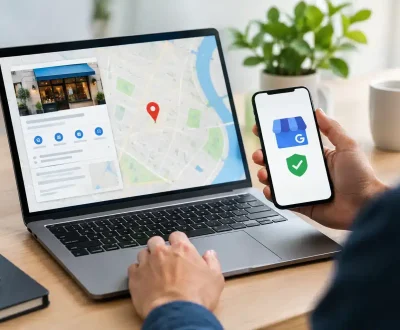
For many local businesses, a Google Business Profile is the first page a prospective customer sees. It should be treated with the same care as a primary website page because it can produce direct calls, direction requests, website visits, and appointment inquiries.
A strong profile starts with accurate fundamentals: the correct business name, address or service-area setup, phone number, hours, primary category, and service categories. From there, the details matter. Services should be clear and complete. Photos should reflect current work, staff, equipment, and location where appropriate. Business descriptions should explain what makes the company useful to local customers, not repeat generic marketing language.
Reviews are equally central. They influence Map Pack visibility, customer confidence, and the language search platforms associate with your business. A steady review process is more valuable than an occasional burst of requests. Ask shortly after a successful job, make the process easy, and respond professionally to feedback.
Responses should not sound copied and pasted. They are public evidence that your company listens, resolves concerns, and values customer experience. For businesses that depend on booked jobs and referrals, that visible professionalism can affect conversion as much as the star rating itself.
AI Answers Will Favor Businesses With Verifiable Information
AI-powered search is changing how people ask local questions. Instead of searching only for "bookkeeper Jacksonville," a business owner may ask which local bookkeeping firm works with contractors, handles monthly reporting, and has a reputation for responsive service.
Generative engine optimization is not about trying to force an AI tool to mention your company. It is about making the factual evidence of your expertise clear, consistent, and available across your digital presence. AI systems need reliable information to form answers, compare options, and cite or summarize businesses.
Your website plays a key role here. Service pages should clearly explain what you do, who you serve, and where you work. Team and company pages should establish real-world experience. Frequently asked questions can address the questions customers actually ask before contacting you. Case studies and project galleries can demonstrate outcomes rather than relying on broad claims.
Structured data and schema markup help search engines interpret this information. They can clarify business details, services, reviews, FAQs, locations, and organizational relationships. Schema does not guarantee an AI mention or a rich result, but it reduces ambiguity. For complex local businesses, reducing ambiguity is a meaningful advantage.
Build for Trust Before You Build for Traffic
Traffic that does not convert is not a growth strategy. The future of local search will reward businesses that give customers confidence quickly, especially on mobile devices.
That means a website should load reliably, make calls and forms easy to use, and present the most relevant information without forcing visitors to hunt for it. A homeowner with a burst pipe does not want a clever brand story before finding the emergency service number. A prospective legal client needs to understand the practice area, process, and next action. A restaurant guest needs current hours, location, menu access, and recent photos.
Trust is built through consistent details: accurate service information, recognizable branding, legitimate reviews, professional photography, clear policies, and visible proof of work. It is also built through technical quality. Broken forms, duplicate location data, slow mobile pages, and outdated profiles introduce doubt even when the service itself is excellent.
Measure Calls, Jobs, and Quality of Leads
Rankings remain useful, but they are an incomplete scorecard. A first-place ranking for a low-intent query may create less value than a lower position for a service search that consistently produces booked work.
Local businesses should track calls, form submissions, appointment requests, direction requests, and, when possible, the jobs and revenue tied to those leads. This creates a clearer view of which services, locations, and campaigns deserve additional investment.
The right strategy varies by business. A contractor with a broad service area may need stronger service pages and Google Maps optimization. A professional firm may benefit from deeper expertise content and reputation management. A business in a highly competitive category may need paid search to support organic visibility while longer-term SEO gains traction.
The common goal is not visibility for its own sake. It is a dependable pipeline of qualified local leads.
Prepare Your Business for What Comes Next
The businesses most prepared for future local search will be the ones that maintain accurate information, document their expertise, earn reviews consistently, and make their websites useful at the moment of decision. They will treat Google Maps, organic search, AI answers, and paid media as connected parts of one local lead-generation system.
Start with the customer questions that lead to calls and booked jobs. Make sure your business can answer them clearly wherever customers search, compare, and decide. That work creates a stronger digital foundation now, and it gives every new search platform more reason to put your business in front of the right local customer.
About us and this blog
We are a digital marketing company with a focus on helping our customers achieve great results across several key areas.
Request a free quote
We offer professional SEO services that help websites increase their organic search score drastically in order to compete for the highest rankings even when it comes to highly competitive keywords.
Subscribe to our newsletter!
More from our blog
See all posts