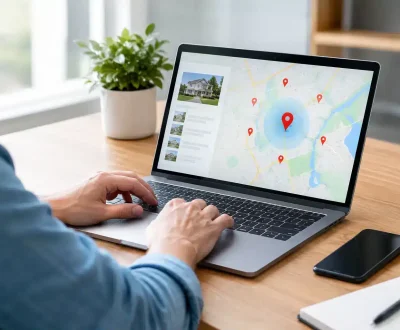
A Jacksonville business website has a short window to do its job. A homeowner comparing roofers, a parent looking for pet care, or a business owner seeking bookkeeping help wants quick proof that you are credible, local, and easy to contact. Custom website development Jacksonville businesses invest in should be built around that decision, not around a generic theme or a collection of attractive pages.
A polished site matters, but appearance alone does not produce calls or booked work. The strongest websites connect brand presentation, service information, local search visibility, and clear conversion paths. They give prospective customers the confidence to act while giving search engines and AI-powered answer platforms the context needed to understand what the business does and where it serves.
What Custom Development Should Accomplish
Custom development does not simply mean starting with a blank screen. It means making deliberate decisions about page structure, content, functionality, and technical setup based on how your customers search and how your team turns inquiries into revenue.
For a Jacksonville landscaping company, that may mean service pages organized around landscape design, irrigation, sod installation, and maintenance, with clear coverage for neighborhoods and nearby communities. For a law firm, it may mean practice-area pages, attorney credentials, consultation requests, and trust-building information that helps a visitor feel prepared to make contact. The needs are different, but the goal is the same: reduce uncertainty and make the next step obvious.
A custom website should support measurable business outcomes, including more qualified calls, form submissions, appointment requests, and quote opportunities. That requires more than a contact form in the footer. It requires a site that answers the questions customers ask before they call: Do you serve my area? Do you handle this type of project? What should I expect? Why should I choose you?
A Website Is Part of the Lead-Generation System
Many businesses treat a new website as a one-time design project. In practice, it is the center of an ongoing digital growth system. Google Business Profile listings, Map Pack visibility, paid advertising, review generation, social content, and organic search efforts all send people back to the site. If the site is confusing, slow, outdated, or vague, marketing dollars have less impact.
The reverse is also true. A clear, conversion-focused website makes every channel work harder. A visitor who arrives from Google Ads should land on a page that matches the service they searched for. Someone who finds your Google Business Profile should see the same service areas, brand identity, phone number, and proof of quality when they visit your site. Consistency builds trust and helps prevent lost leads.
The Building Blocks of a High-Performing Local Website
The right build varies by industry, sales cycle, and service area. Still, high-performing local business sites share several fundamentals.
First, navigation needs to be simple. Visitors should be able to find core services, service areas, reviews or project examples, and a way to contact you without working through layers of menus. A site with too many choices can hide the pages that actually drive inquiries.
Second, each key service needs its own useful page. A single page that says "we do roofing" is rarely enough for a contractor offering repairs, replacements, inspections, and commercial work. Dedicated service pages allow you to explain the work, establish expertise, show relevant proof, and target the terms prospective customers use. They also create better landing pages for paid campaigns.
Third, local relevance must be earned with specifics. Jacksonville is a large and varied market, and many businesses also serve St. Johns, Ponte Vedra, Orange Park, Fernandina Beach, and Northeast Florida communities. Service-area content should reflect real operations, not a copied list of cities inserted across dozens of thin pages. Genuine local details, completed work, customer testimonials, and accurate service information are more persuasive to people and more durable for search performance.
Finally, conversion elements must fit the buying decision. An emergency pest-control customer may need a prominent call button and fast response messaging. A commercial service buyer may prefer a detailed request form, case studies, and an option to schedule a consultation. The best call to action is not always "Contact Us." It is the action that moves a qualified prospect forward with the least friction.
Why Templates Often Limit Growth
A quality template can be a reasonable starting point for a new business with a tight budget. It can provide a clean visual foundation and get essential information online quickly. The trade-off is that templates are designed to serve many types of companies, which means they often do not reflect your services, sales process, brand, or future marketing needs.
Common limitations include generic page layouts, weak service-page structure, difficult content editing, bloated code, and limited flexibility when a business adds locations, campaigns, booking tools, or new offerings. Some sites also look nearly identical to competitors using the same theme. That does not automatically hurt rankings, but it makes it harder to establish a distinct, credible presence.
Custom website development gives a business more control over what matters: page hierarchy, mobile experience, lead forms, tracking, integrations, content modules, and technical SEO. It also allows for a design system that can grow without requiring a full rebuild every time the company expands.
The answer is not that every company needs an expensive, highly complex platform. It depends on the business model and growth plan. A local service company may need a focused marketing website with strong SEO architecture. A hospitality business may need reservations, menus, event pages, and review integration. The right solution is the one that supports the next stage of growth without creating unnecessary cost or maintenance burden.
Search Visibility Starts During Development
Search optimization should not be added after the site is finished. When SEO enters only at the end, businesses often discover that key pages are missing, URLs need to change, navigation does not support priority services, or content has no logical place to live.
Development should begin with a plan for search intent. What does a customer type into Google when they need your service? Which searches show local results? Which pages should support transactional searches, and which should answer early research questions? Those decisions influence the sitemap, content plan, internal linking, heading structure, and page templates.
Technical work matters as well. Clean site architecture, fast page delivery, mobile usability, accessible design practices, secure hosting, and accurate analytics all affect performance. Structured data and schema markup can give search engines clearer signals about your organization, services, locations, reviews, FAQs, and other relevant business information.
That same clarity is increasingly valuable for AI search visibility. Generative engine optimization and answer engine optimization are not magic shortcuts to being cited by AI tools. They are disciplined ways to make business information clear, accurate, well-organized, and supported by authority signals. A website with specific service details, helpful answers, consistent local information, and sound technical foundations is better positioned for both traditional search and emerging answer experiences.
Build for Mobile Customers and Busy Teams
For many local businesses, the first site visit happens on a phone between appointments, during a lunch break, or after a customer sees a Google Maps result. Mobile design cannot be an afterthought. Phone numbers should be easy to tap, forms should be short enough to complete, text should be readable, and important information should appear before a visitor has to scroll through oversized graphics.
The back end matters too. If your team cannot update hours, add a project photo, publish a service announcement, or review lead sources without calling a developer for every small change, the site becomes less useful over time. A good development approach balances professional control with practical usability for the people who operate the business.
At Kelly Advantage, website strategy is tied to the channels that produce visibility and leads, from local SEO and Google Maps optimization to paid advertising, reputation management, and AI search preparation. That connection keeps the website from becoming a standalone asset with no clear role in growth.
Measure More Than Traffic
Traffic can be a useful signal, but it is not the finish line. A website that attracts thousands of irrelevant visitors is less valuable than one that brings in a smaller number of people ready to request service.
Set up measurement around the actions that matter: phone calls, contact forms, quote requests, appointment bookings, chats, and qualified leads from specific service pages. Review which channels produce those actions and where visitors abandon the process. If a high-traffic page generates few inquiries, the issue may be unclear messaging, weak trust signals, an inconvenient call to action, or traffic that does not match the page.
This is where ongoing improvement creates an advantage. A website should evolve as search behavior changes, new services are added, reviews arrive, and the business learns which jobs are most profitable. Small refinements to content, forms, page layout, and local proof can produce meaningful gains without starting over.
The right custom website is not the one with the most features. It is the one that makes it easier for Jacksonville customers to choose your business, contact your team, and become the next booked job.
About us and this blog
We are a digital marketing company with a focus on helping our customers achieve great results across several key areas.
Request a free quote
We offer professional SEO services that help websites increase their organic search score drastically in order to compete for the highest rankings even when it comes to highly competitive keywords.
Subscribe to our newsletter!
More from our blog
See all posts