A homeowner whose air conditioner stops working on a July afternoon is not researching marketing terminology. They are searching for a nearby company, checking ratings, scanning service areas, and calling the business that looks capable of helping now. A local lead generation guide should start there: with the real decisions customers make before they call, request an estimate, or book an appointment.
For Jacksonville and Northeast Florida businesses, local lead generation is not one tactic or one ranking position. It is a connected system that makes your company easy to find, credible to choose, and simple to contact across Google Search, Google Maps, paid ads, your website, and increasingly, AI-powered answer platforms. The goal is not more traffic for its own sake. The goal is more qualified calls, form submissions, appointments, and booked jobs.
Build Your Local Lead Generation Foundation
A lead-generation system cannot compensate for a confusing website, inaccurate business information, or a weak offer. Before investing heavily in SEO or advertising, make sure the fundamentals give prospective customers a reason to act.
Start with the conversion path. A visitor should be able to tell within seconds what you do, where you work, and what the next step looks like. A roofing contractor may need a visible inspection request and emergency phone number. A law firm may need practice-area pages, trust signals, and an easy consultation form. A restaurant needs current hours, menus, directions, and prominent reservation or ordering options.
The best path depends on the service and customer urgency. For emergency plumbing, a click-to-call button can be the primary conversion. For a landscaping project or commercial website redesign, customers may need proof of experience before submitting a detailed inquiry. Design the website around that decision process rather than forcing every visitor through the same generic contact form.
Your business details must also match wherever people find you. Use the same business name, primary phone number, website address, hours, and service-area information across your website, Google Business Profile, major directories, social profiles, and industry listings. Inconsistent information creates friction for customers and weakens confidence in local search signals.
Make service pages specific enough to rank and convert
A single page that says you provide every service to every part of Florida rarely performs well. Create substantial pages for your core services, explaining what is included, who the service is for, common customer concerns, proof of expertise, and a clear next step.
Location pages can be valuable when they represent real markets you serve and contain useful local context. They should not be lightly rewritten copies with a city name swapped into the headline. A strong Ponte Vedra page, for example, may address the services most requested there, travel availability, project examples, reviews, and localized FAQs. The point is to help a nearby prospect make a decision, not to manufacture pages for every map pin.
Win More Calls From Google Maps and Local Search
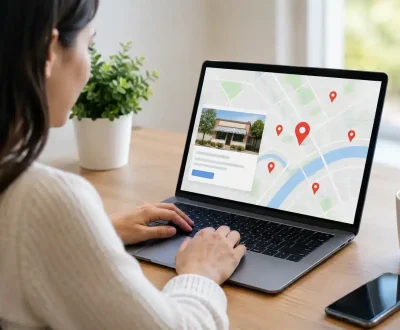
For many service businesses, the Map Pack is the highest-intent visibility available. A customer searching "pest control near me," "Jacksonville bookkeeper," or "roof repair in St. Johns" may call directly from the map results without ever visiting a website.
Your Google Business Profile is therefore a lead-generation asset, not an item to set up and forget. Complete every applicable field, choose accurate primary and secondary categories, define service areas carefully, add current hours, and maintain a useful business description. Upload original photos that show your team, work, vehicles, location, products, and completed projects. Stock photography may support your website, but it does little to prove that a local business is active and real.
Reviews are equally central. Consistent, detailed reviews influence customer trust and can strengthen your local prominence. Build a simple review request process into completed jobs, closed cases, successful appointments, or delivered projects. Ask at the point when the customer is most satisfied, and make responding part of your weekly routine.
Do not chase reviews with incentives or write responses that reveal private customer information. A professional reply should thank the reviewer, reinforce the service provided when appropriate, and show prospective customers that your company pays attention. The quantity of reviews matters, but recency, quality, and credible responses matter too.
Local rankings also depend on relevance, distance, and prominence. You cannot control where every searcher is located, and no agency can promise a permanent number-one Maps ranking. You can improve the signals within your control: accurate listings, strong reviews, a technically sound website, relevant service content, local authority, and an active profile.
Turn Website Visibility Into Qualified Leads
Ranking for broad terms is useful only when the people arriving are likely customers. A Jacksonville HVAC company might attract traffic with a general article about indoor air quality, but a page targeting AC repair, ductless installation, or maintenance plans is usually closer to a booking decision.
Organize content around search intent. Transactional pages should make it easy to request service. Informational content should answer the questions that delay decisions, such as whether a repair is worthwhile, what a service costs, how quickly work can be scheduled, or what to expect during an initial consultation. Those answers can attract earlier-stage prospects and build confidence before they are ready to contact you.
Technical SEO supports this work behind the scenes. Fast loading pages, mobile usability, logical site architecture, secure hosting, clean indexing, and clear internal navigation help search engines understand the site and help customers use it. Structured data and schema markup can provide clearer context about your organization, services, locations, reviews, FAQs, and other business details.
AI search visibility is becoming part of this same foundation. Generative engine optimization and answer engine optimization are not replacements for local SEO. They build on it. AI-powered results need clear, trustworthy source material to understand what a business does, where it serves, and why it is credible. Well-structured service pages, accurate entity information, useful FAQs, review evidence, and consistent authority signals make your business easier to surface in both conventional and emerging search experiences.
Use Paid Media Where It Improves the Economics
Organic visibility compounds over time, but paid search can create immediate coverage for high-value services and competitive searches. It is especially useful when a business is launching, entering a new market, promoting seasonal work, or trying to capture urgent demand that competitors already bid on.
The trade-off is cost and control. Paid advertising can generate calls quickly, but an unfocused campaign can also spend heavily on irrelevant searches. Target service-specific keywords, use geographic controls appropriate to your real service area, exclude poor-fit searches, and send ad traffic to pages built for the advertised offer. A general homepage is often not the right landing page for an emergency repair ad or a consultation campaign.
Track calls, form submissions, booked appointments, and qualified opportunities, not just clicks. A campaign that produces fewer leads may still be more profitable if those leads become better jobs. For businesses with longer sales cycles, connect marketing data to outcomes in your CRM or sales process so you can see which channels produce revenue rather than merely activity.
Measure the Whole Local Lead Generation System
Local marketing often fails because each channel is judged in isolation. A customer may first see a Google ad, later search your company by name, read reviews, visit your website from Maps, and call two days afterward. Treating that final call as the only meaningful touchpoint can lead to poor budget decisions.
Set practical measurements that match your business model: qualified phone calls, estimate requests, scheduled consultations, booked jobs, cost per qualified lead, close rate, and revenue by source. Review them monthly alongside less immediate indicators such as Maps visibility, non-branded search growth, review velocity, website engagement, and top-performing service pages.
Call quality deserves special attention. If calls are not converting, the problem may not be traffic volume. The business could be targeting the wrong service, attracting customers outside its service area, presenting unclear pricing expectations, responding too slowly, or sending prospects to a page that does not answer their questions. Marketing and operations have to work together for lead generation to produce growth.
Kelly Advantage approaches local visibility as a connected system because the website, Google Business Profile, SEO, paid media, reputation, and analytics all shape the same customer decision. Improve the next weak point in that system, then measure what changes. The most durable local growth usually comes from doing the unglamorous work consistently: being easy to find, easy to trust, and easy to contact when a nearby customer is ready to buy.
About us and this blog
We are a digital marketing company with a focus on helping our customers achieve great results across several key areas.
Request a free quote
We offer professional SEO services that help websites increase their organic search score drastically in order to compete for the highest rankings even when it comes to highly competitive keywords.
Subscribe to our newsletter!
More from our blog
See all posts