A website that looks acceptable but fails to generate calls is not a low-cost solution. It is a missed opportunity every time a Jacksonville homeowner searches for a roofer, attorney, landscaper, or service provider and chooses a competitor instead. The website builder versus agency decision is not simply about design or startup cost. It is a decision about how much of your digital presence is built to attract, persuade, and convert qualified prospects.
For some businesses, a website builder is a practical starting point. For others, especially companies competing for local service searches, Map Pack visibility, and high-value leads, it can create limitations that become expensive over time. The right choice depends on your growth goals, internal resources, competition, and the role your website needs to play in your sales process.
Website Builder Versus Agency: The Core Difference
A website builder gives you software, templates, hosting, and a way to publish pages without writing much code. Platforms can be useful for getting basic information online quickly. A business owner can select a layout, add service descriptions, upload photos, and publish a functional site in a short period.
An agency delivers a broader business asset. The work should begin with how customers search, what they need to see before contacting you, and where competitors are winning visibility. From there, the agency can shape the site architecture, messaging, design, technical SEO, local signals, tracking, and conversion paths around measurable outcomes.
That difference matters when a prospective customer lands on your site from Google, Google Maps, a paid ad, or an AI-generated answer. A template can display your phone number. A strategic website can make it easier for the right visitor to understand your value, trust your business, and take action.
When a Website Builder Makes Sense
A website builder can be a reasonable choice for a new business with a limited budget, a simple offering, and modest expectations for organic search performance. It may also work for organizations that need a temporary online presence for an event, a basic brochure site, or a narrowly focused service with little local competition.
Speed is the primary advantage. Many builders offer predesigned sections, mobile-responsive templates, basic forms, and straightforward editing. If you have strong writing, quality photography, brand direction, and enough time to maintain the site, you can publish a respectable first version.
The lower upfront price is appealing, but it should be evaluated honestly. The monthly platform fee is only part of the cost. Owners often spend many hours choosing layouts, resizing images, writing pages, troubleshooting formatting, setting up tracking, and trying to determine why the site is not appearing in search results. That time has value, particularly when it pulls attention away from serving customers and managing operations.
A builder can also be limiting when your needs change. You may need location pages for multiple service areas, detailed service pages, custom quote forms, review integration, campaign landing pages, schema markup, or clearer calls to action. Some platforms support these needs better than others, but adding them effectively requires strategy and technical know-how.
Where Agency-Built Websites Earn Their Cost
An agency-built site should not cost more merely because it has more custom graphics. Its value comes from connecting design decisions to lead generation. For a Northeast Florida service business, that may mean structuring pages around the services and cities people actually search, making click-to-call actions prominent on mobile, and reducing friction between a visitor's question and a booked appointment.
A professional agency also considers the technical foundation that visitors rarely see. Page speed, crawlability, indexation, internal linking, metadata, redirects, image optimization, analytics, and conversion tracking all affect how well a website supports marketing. If a paid campaign produces calls, you should be able to identify that. If a service page gains organic traffic but produces few inquiries, you should be able to improve it with evidence rather than guesswork.
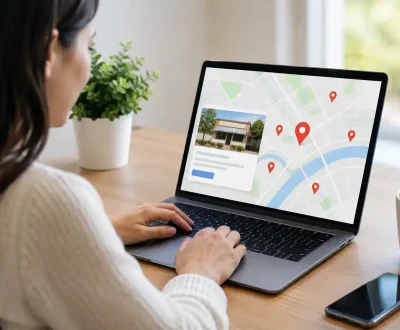
Local visibility requires additional attention. Your website should reinforce the information in your Google Business Profile, including service categories, geographic relevance, credibility, and the services you want to be known for. Well-organized location and service content can support stronger organic visibility alongside a more complete local search strategy involving reviews, listings, photos, and Map Pack optimization.
There is also a brand consideration. Buyers make fast judgments, particularly in industries where trust is essential. A roofing contractor, law firm, bookkeeping practice, pest control company, or nonprofit needs more than a generic layout. The site needs to communicate professionalism, explain the offer clearly, and give visitors confidence that they are contacting a capable organization.
SEO Is Not a Checkbox
One of the most common misunderstandings is that a website builder automatically handles SEO. Most platforms provide basic fields for page titles, descriptions, image text, and URLs. Those tools are useful, but they are not an SEO strategy.
Search performance depends on whether your website answers real search intent better than competing pages. It depends on content depth, site structure, local relevance, technical health, authority signals, and the quality of the user experience. A page titled Emergency Plumbing Jacksonville will not rank simply because the title contains the phrase. It needs helpful content, appropriate page structure, credible business signals, and a site that Google can understand and trust.
The search landscape is also expanding beyond traditional blue links. AI-powered search features and answer engines increasingly interpret entities, services, locations, and expertise. Structured data and schema markup can help search platforms better understand key details on a business website. Clear FAQs, service information, reviews, organization details, and consistent brand facts can improve the quality of those signals.
That does not mean every business needs an elaborate custom build on day one. It means the site should be built with a foundation that can support SEO, local optimization, and generative engine optimization as the business grows. Retrofitting a weak site later often costs more than making sound decisions at the beginning.
Compare the Full Cost, Not Just the Initial Price
A website builder generally wins on initial cost. An agency often wins on strategic value when the website is expected to contribute to revenue. The useful question is not Which option is cheaper? It is What does one additional qualified lead, signed client, or booked job mean to the business?
Consider a home improvement company that earns several thousand dollars from a typical project. If a professionally planned website produces even a small number of additional qualified inquiries each month, the return can quickly exceed the difference in initial cost. By contrast, a low-cost site that receives traffic but fails to convert can quietly drain advertising spend and sales opportunities.
Ownership deserves attention as well. Before choosing a platform or provider, ask who owns the domain, website files, written content, photos, analytics accounts, advertising accounts, and Google Business Profile access. A reliable partner should be clear about the arrangement and provide a plan for ongoing hosting, maintenance, security, backups, and updates.
The Best Choice Depends on Your Growth Stage
Choose a website builder when you need a basic presence quickly, your budget is genuinely limited, and you can accept that marketing performance may require future investment. Start cleanly: use your own domain, keep account access documented, write useful service information, and avoid trying to rank dozens of thin pages for every nearby city.
Choose an agency when the website is expected to support consistent lead generation, paid advertising, local rankings, multiple service lines, or a competitive market. It is particularly valuable when your team does not have the time or expertise to manage design, content, technical issues, SEO, analytics, and ongoing optimization internally.
For established companies, the best answer is often not a one-time build. A strong website becomes the center of an active growth system. Search optimization brings in high-intent visitors. Google Maps optimization strengthens local discovery. Paid ads create immediate opportunities. Reputation management builds trust. Analytics show which efforts are producing calls and booked work.
Kelly Advantage approaches websites from that perspective: attractive, usable design should be connected to visibility and measurable business outcomes, not treated as a standalone project.
Before making the decision, identify what success looks like six to twelve months after launch. If success means having a digital business card, a builder may be enough. If success means more qualified calls, stronger local visibility, and a platform that can grow with the business, build for that outcome from the start.
About us and this blog
We are a digital marketing company with a focus on helping our customers achieve great results across several key areas.
Request a free quote
We offer professional SEO services that help websites increase their organic search score drastically in order to compete for the highest rankings even when it comes to highly competitive keywords.
Subscribe to our newsletter!
More from our blog
See all posts