Blog
Marketing Agency Jacksonville FL Businesses Trust
- August 29, 2026
- Digital Marketing Strategy, Local SEO & Google Maps
A homeowner searches for a roofer after a storm. A family needs a pest control company before guests arrive. A business owner looks for an accountant, attorney, landscaper, or IT provider and wants a clear answer quickly. In those moments, a marketing agency Jacksonville FL businesses choose should do more than make a brand look polished. It should help the right customers find the business, trust it, and take the next step.
That requires connected work. A strong website without visibility will not produce enough opportunities. High rankings that lead to a slow, confusing website can waste the traffic you earned. Paid ads without accurate tracking can create the appearance of activity while leaving owners unsure which dollars produced calls and booked jobs. The most effective marketing system brings design, local search, content, advertising, and measurement into one accountable plan.
What a Jacksonville Marketing Agency Should Actually Deliver
Many agencies lead with a menu of services. Services matter, but outcomes matter more. Before choosing a partner, business owners should be able to understand how website improvements, search optimization, Google Maps work, and advertising will translate into more qualified inquiries.
For a local service business, that may mean more calls from customers within a defined service area. For a professional firm, it may mean better visibility for high-value practice areas and more consultation requests. For a hospitality, pet care, or personal service business, it may mean more appointment bookings, stronger reviews, and a more credible first impression before a customer ever calls.
The right strategy depends on the market. A newer company may need a conversion-focused website, a properly built Google Business Profile, and foundational local SEO before it should invest heavily in broad advertising. An established company with a solid reputation may be ready to expand into additional service pages, paid search campaigns, or content that supports larger geographic reach. There is no useful one-size-fits-all package when competition, margins, sales cycles, and local demand vary this much.
A Website Built to Turn Interest Into Action
Your website is often the center of the marketing system. It needs to load quickly, work cleanly on mobile devices, communicate what you do in seconds, and make it easy for visitors to call, request an estimate, schedule service, or submit an inquiry.
Attractive design is part of the job, not the whole job. The strongest business websites organize services around the questions customers ask, show proof of capability, clarify service areas, and place calls to action where people need them. For a roofing company, that could mean separating repair, replacement, inspection, and storm-damage services. For a legal practice, it may mean clear practice-area pages supported by attorney credentials, case intake options, and focused consultation prompts.
Website development should also account for the work that happens behind the scenes: secure hosting, maintenance, analytics, form reliability, tracking, and technical SEO. A site that looks complete at launch but is never maintained can become slower, less secure, and less effective over time.
Visibility Starts Where Jacksonville Customers Search
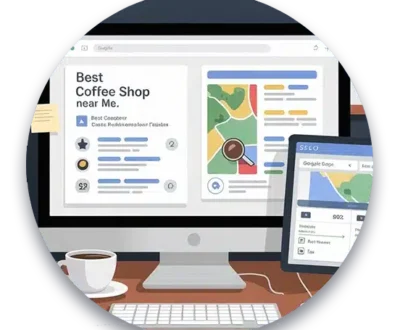
Google search and the Map Pack remain major sources of high-intent local leads. When someone searches "landscaper near me" or "Jacksonville AC repair," they are often close to making a decision. Showing up in those results requires more than adding a few keywords to a homepage.
Local SEO begins with accurate business information. Your Google Business Profile should reflect the correct categories, services, service areas, hours, phone number, photos, and business description. It should also be actively managed. New photos, thoughtful review responses, service details, and accurate updates tell customers and search platforms that the listing represents a real, active business.
A local search campaign also needs consistency beyond Google. Business information should match across relevant directories and industry sources, while the website should provide clear location and service signals. Service pages, location pages where appropriate, customer reviews, local project examples, and frequently asked questions can all strengthen relevance when they are created for users rather than copied across pages.
There is a trade-off here. Creating a separate page for every suburb with nearly identical language rarely builds durable rankings or customer confidence. It can create thin content and a poor experience. Better results come from useful pages that explain the services offered in a location, the types of problems solved, the proof available, and how a customer can get help.
Reputation Is a Conversion Asset
Reviews do not replace great service, but they make it easier for prospective customers to choose you. A business with current, credible reviews and professional responses has a meaningful advantage over a competitor with an incomplete profile or unanswered complaints.
Reputation management should make requesting reviews practical for staff and customers, without pressuring people or trying to control feedback. It should also give the business a clear response process. A quick, professional answer to a concern can demonstrate accountability. Ignoring it leaves the customer narrative unanswered in a public place.
For businesses competing in crowded Jacksonville categories, reviews, photos, and a complete Google Business Profile can influence whether a searcher clicks, calls, or keeps scrolling.
Paid Media Needs Clear Economics
Google Ads and paid social can create immediate reach, especially when organic visibility is still growing or when a business wants to promote a seasonal service. But paid campaigns should not be treated as a substitute for strategy.
An effective paid search campaign starts with intent. Terms tied to immediate needs, specific services, and defined locations are often more valuable than broad traffic. Ad copy should match the landing page, and the landing page should make a relevant offer and a clear next step. If someone searches for emergency plumbing, sending them to a generic homepage introduces unnecessary friction.
Tracking is equally important. Businesses should know whether campaigns generated phone calls, form submissions, booked appointments, and qualified leads - not just impressions or clicks. The numbers should be interpreted in context. A higher cost per lead may be acceptable if those leads become profitable jobs. A low-cost campaign is not a win if the inquiries are outside the service area, poorly matched, or impossible to reach.
AI Search Visibility Is Becoming Part of Local Discovery
Customers are increasingly asking AI-powered search tools direct questions: who provides a service nearby, which company has experience with a specific problem, or what provider has strong reviews. These tools may pull answers from websites, business profiles, structured information, trusted mentions, and established search results.
That is why AI SEO, answer engine optimization, and generative engine optimization should be practical extensions of a sound search strategy. The work includes creating clear service content, answering real customer questions, maintaining accurate business information, and implementing structured data and schema markup that helps search systems understand the business.
Structured data does not guarantee a top answer. No ethical agency should promise that. It does help make essential facts - such as services, locations, reviews, organizational details, and FAQs - easier for search engines and AI systems to interpret. Combined with useful content and strong technical foundations, it improves a business's ability to be represented accurately as search behavior changes.
How to Evaluate a Marketing Agency in Jacksonville, FL
Look past broad claims of being "full service." Ask how the agency will connect its work to your goals. A credible partner should be able to discuss your market, service area, target customer, sales process, and current barriers to growth before recommending priorities.
You should also ask what reporting will show. Rankings can be useful indicators, but they are not the final measure. Look for visibility trends, map presence, website engagement, calls, form leads, booked work where available, and the quality of inquiries coming in. The reporting should help you make decisions, not overwhelm you with disconnected data.
Experience across local industries is valuable because the mechanics of lead generation are familiar, but the strategy still needs to be tailored. A pest control company, nonprofit, bookkeeping firm, and home remodeling contractor do not sell in the same way. Their websites, content, advertising, and conversion paths should reflect those differences.
Kelly Advantage approaches digital growth as a connected system: professional web design supported by SEO, local visibility, paid media, Google Business Profile management, reputation support, analytics, and emerging AI search optimization. The objective is straightforward: make the business easier to find and easier to choose.
The best time to evaluate your marketing is before a slow season forces a rushed decision. Start with the customer journey. Search for your own services, review your Maps presence, test your website on a phone, and ask whether a first-time visitor can quickly understand why they should call. The gaps you find will point to the work that can create the next qualified lead.
Should a Small Business Hire an Agency for Google Maps Ranking?
Does Google Business Profile Optimization Help Google Maps Ranking?
About us and this blog
We are a digital marketing company with a focus on helping our customers achieve great results across several key areas.
Request a free quote
We offer professional SEO services that help websites increase their organic search score drastically in order to compete for the highest rankings even when it comes to highly competitive keywords.
Subscribe to our newsletter!
More from our blog
See all posts