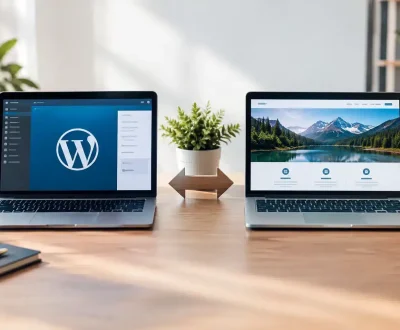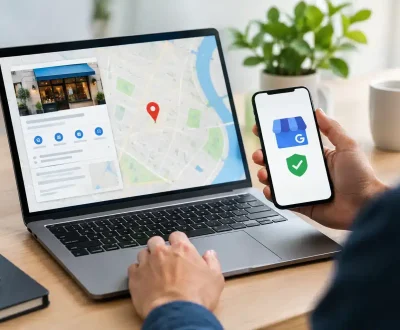
A roofing website redesign example is only valuable if it shows more than a newer logo, better photos, and a cleaner homepage. For a roofing contractor, the real test is whether the new site helps homeowners find the company, trust it quickly, request an inspection, and ultimately book work. A strong redesign connects design decisions to calls, estimate requests, Google visibility, and a sales process the team can actually manage.
A Roofing Website Redesign Example: The Business Problem
Consider a Jacksonville-area roofing company with a site built several years ago. It technically works, but it loads slowly on mobile devices, buries its phone number in the header, uses generic service descriptions, and has only one short page for every service. Its Google Business Profile receives views, but the website does little to turn those local searches into inspection requests.
The company may still receive referrals and branded searches. The missed opportunity is the homeowner searching "roof repair near me," "storm damage roofing," or "roof replacement in Jacksonville" who lands on an unconvincing page and leaves before making contact.
In this roofing website redesign example, the goal is not to make the old site look more current. The goal is to build a lead-generation asset around the questions, urgency, and trust requirements of the roofing buyer.
That starts with understanding the difference between a replacement customer and a repair customer. A homeowner with an active leak needs clear next steps, an easy way to call, and evidence that the contractor responds quickly. A homeowner considering a full replacement may spend weeks comparing materials, financing options, reviews, warranties, and local credentials. The website should support both paths without forcing every visitor through the same generic contact form.
What Changed in the Redesign
The redesigned homepage leads with a direct value proposition, service area, primary phone number, and a clear inspection request option. It does not make visitors hunt for basic answers. Above the fold, the homeowner can immediately see what the roofer does, where it works, and how to take the next step.
From there, the navigation separates high-value services such as roof replacement, roof repair, storm damage, commercial roofing, and gutter services. Each core service receives a dedicated page with useful copy, project photography, frequently asked questions, calls to action, and location relevance. This structure gives visitors a better experience and gives search engines clearer signals about the services the company provides.
The visual system also changes. Instead of stock images that could belong to any contractor, the site features real crews, completed roofs, branded vehicles, team members, and projects from the local market. Roofing is a high-trust purchase. Authentic photography helps visitors judge whether they are dealing with an established local company or a temporary operation with a polished ad campaign.
Social proof appears where decisions happen, not only on a separate testimonials page. Short review excerpts, warranty information, insurance credentials, manufacturer certifications, and project outcomes can reinforce confidence near service descriptions and contact prompts. The strongest proof is specific: a homeowner describing communication during an insurance claim is more persuasive than a vague statement that the company did a great job.
Mobile Experience Is a Revenue Issue
Most roofing searches begin on a phone, often after a storm or when a homeowner notices a leak. A redesign should treat mobile usability as a lead-generation requirement, not a secondary technical task.
In practice, that means prominent tap-to-call options, short forms, large readable text, fast-loading images, and buttons that are easy to use with one hand. It also means removing distractions. A homepage slider, oversized video background, or pop-up that blocks the screen may look impressive in a desktop presentation, but it can slow the page down and frustrate a worried homeowner.
There is a trade-off. High-resolution project photography helps sell roofing work, especially replacement projects with a strong visual transformation. But uncompressed images can damage performance. The right approach preserves image quality where it matters while using modern formats, appropriate sizing, and efficient loading practices to keep pages responsive.
A redesigned site should also make the contact path measurable. Call tracking, form tracking, appointment events, and campaign attribution reveal which pages and traffic sources produce actual opportunities. Without that data, a contractor may know the site receives visitors but have no reliable way to determine whether the redesign improved lead quality.
Local SEO Must Be Built Into the Website
A roofing website can be attractive and still underperform in local search. Local visibility depends on more than a Google Business Profile. The website needs to support the company’s relevance, authority, and service-area signals.
For this example, the redesign includes clear business information, consistent contact details, a properly organized service-area section, and unique pages for meaningful markets the company actually serves. A page for Jacksonville, Ponte Vedra, St. Johns, or another nearby community should not be a copied template with the city name switched out. It should explain the services offered there, reference local conditions when relevant, and provide useful context for homeowners.
Florida roofing searches often carry storm-related urgency. Content can address wind damage, roof inspections after severe weather, insurance documentation, aging shingle systems, and the signs that repair may no longer be enough. This is not about stuffing a page with every roofing keyword. It is about answering the questions that lead to confident contact decisions.
Structured data is another important component. Appropriate schema markup can help search platforms better understand the business, service offerings, reviews, FAQs, locations, and contact details. It does not guarantee rankings or rich results, but it creates cleaner machine-readable signals for traditional search and emerging AI-driven answer platforms.
That matters as homeowners increasingly receive summarized answers before they visit several websites. Clear service pages, well-written FAQs, accurate business details, and credible proof points make it easier for generative search systems to identify what a roofing company does and who it serves.
Content That Helps Move the Sale Forward
The best roofing websites do not overload visitors with technical jargon. They explain the work in plain English while providing enough detail to establish expertise.
A roof replacement page, for example, can explain what happens during an inspection, when replacement is recommended, material options, timeline expectations, cleanup practices, warranty considerations, and how to request an estimate. A repair page can address common leak sources, damaged flashing, missing shingles, and when an emergency response is needed.
Educational content should be connected to business goals. A guide about what to do after storm damage can help capture relevant search traffic, but it should also lead visitors toward an inspection request or a conversation with the roofing team. The content earns attention by being useful, then earns the lead by making the next step clear.
It also helps the sales team. When a prospect has already reviewed material options, seen local project photos, and understood the inspection process, the initial conversation can be more productive. The website cannot replace a skilled estimator, but it can make the estimator’s job easier.
What Success Looks Like After Launch
A redesign is not finished when the site goes live. The first 60 to 90 days should focus on performance, user behavior, lead sources, and search visibility. Are mobile visitors calling? Which service pages generate form submissions? Are visitors reaching the contact page but abandoning the form? Are Map Pack visitors engaging differently than paid search visitors?
The answers guide ongoing improvements. A page with strong traffic but low conversion may need clearer calls to action, better proof, or a faster load time. A service with high close rates may deserve more content, paid advertising support, and stronger placement across the site. Reputation management and Google Business Profile activity should reinforce the same trust signals visitors see on the website.
For roofing companies, seasonality matters too. Storm events can create sudden demand, while replacement planning may rise during other periods. A flexible website gives the business a place to feature timely messages, update service availability, publish relevant guidance, and direct traffic toward the right conversion path.
The practical lesson from any roofing website redesign example is straightforward: a better-looking website is not the finish line. The right redesign gives a local roofing company a credible digital foundation that can earn visibility, turn urgent searches into qualified calls, and support growth long after the launch date.
About us and this blog
We are a digital marketing company with a focus on helping our customers achieve great results across several key areas.
Request a free quote
We offer professional SEO services that help websites increase their organic search score drastically in order to compete for the highest rankings even when it comes to highly competitive keywords.
Subscribe to our newsletter!
More from our blog
See all posts