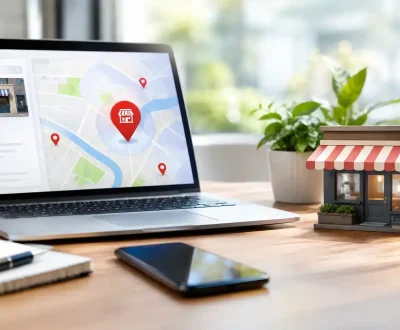
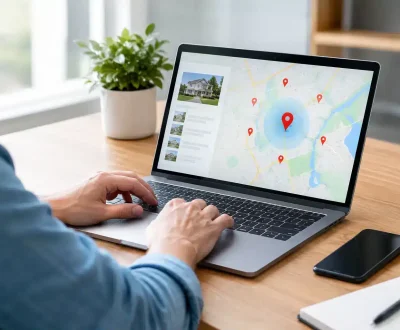
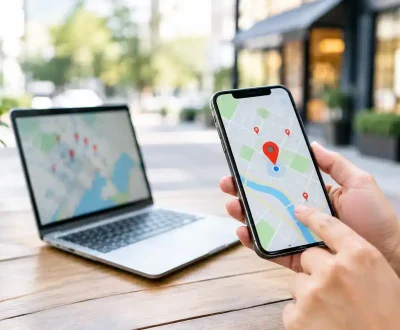
A homeowner searching “emergency roof repair near me” may never visit a website. They may call directly from the Google Map Pack, read a Google Business Profile review, or choose the company surfaced in an AI-generated answer. That is why a zero click search strategy matters for local businesses: visibility still creates leads, even when the searcher does not click a traditional blue link.
For Jacksonville-area service businesses, the goal is not to chase website traffic for its own sake. The goal is to show up with accurate, convincing information at the exact moment a customer is deciding who to call, visit, or hire. A strong website remains central to that work, but it must support a broader search presence across Google Maps, local results, featured snippets, and emerging AI answer platforms.
What Zero-Click Search Means for Your Business
A zero-click search happens when someone gets what they need directly on the search results page. Google may display business hours, reviews, service areas, directions, pricing context, a phone number, or a quick answer without requiring another click. AI-powered search experiences increasingly do the same thing by synthesizing answers from multiple sources.
This can sound like bad news for businesses that measure success only by organic website sessions. It is not. A person who taps “Call,” requests directions, opens photos, or sends a message from your Google Business Profile has taken a high-intent action. For a plumber, attorney, landscaper, or pest control company, that interaction can be more valuable than a casual blog visit.
The real issue is measurement. If reporting focuses only on clicks, a business may assume visibility is declining while calls, direction requests, branded searches, and booked jobs are rising. Zero-click behavior changes where customers convert. It does not eliminate the need to earn their trust.
The Zero Click Search Strategy: Be the Best Answer
A practical zero click search strategy starts by identifying the questions and decisions customers make before they choose a provider. Local intent is especially valuable because it often signals an immediate need: “lawn care company in Ponte Vedra,” “bookkeeper near me,” “how much does termite treatment cost,” or “best family lawyer in Jacksonville.”
Your business should provide clear, consistent answers wherever Google and AI systems look for them. That includes your website, Google Business Profile, credible directories, customer reviews, social profiles, and other authoritative references. Search platforms compare these signals. Conflicting hours, an old phone number, vague service descriptions, or thin location information can reduce confidence and visibility.
Being the best answer does not mean publishing generic content at scale. It means making useful information easy to find, verify, and understand. A roofing company, for example, can explain the signs of storm damage, the areas it serves, its inspection process, emergency availability, and the types of materials it works with. An accountant can clearly define industries served, common tax deadlines, appointment options, and credentials.
Specificity helps both customers and search systems understand what you do. It also filters out poor-fit inquiries, which protects your team’s time and improves lead quality.
Strengthen the Places Customers See First
Treat Your Google Business Profile as a Lead Asset
For many local searches, your Google Business Profile is the first meaningful encounter with your company. It needs the same attention given to a high-performing service page. Confirm that the primary category reflects your core service, add relevant secondary categories only where they are accurate, and complete every applicable field.
Your profile should clearly state services, service areas, hours, contact details, appointment options, and business attributes. Add current photos that show your team, completed work, vehicles, facility, or products. Photos are not decoration. They help searchers decide whether your business appears established, local, and capable.
Reviews are equally important. A steady review process gives potential customers proof that real people have had positive experiences. Ask for reviews after successful work, respond professionally, and avoid scripted language. Detailed reviews that naturally mention service types, locations, responsiveness, and outcomes can reinforce relevance while helping customers feel more confident calling.
Build Pages for Decisions, Not Just Keywords
Your website should answer the questions that a Google Business Profile cannot fully address. Service pages need more than a short description and a contact form. Explain the work, who it is for, the process, common concerns, geographic coverage, and the next step.
Location pages can be useful when they represent real markets you serve and contain genuinely local information. They should not be near-duplicate pages created only by swapping city names. A page for St. Johns may address the services offered there, relevant neighborhoods, project examples, travel considerations, and how local customers can schedule service.
Clear page structure also improves visibility beyond traditional search. Use descriptive headings, direct answers near the top of a page, concise service explanations, and well-labeled FAQs when those questions are truly common. This gives search engines and AI systems stronger source material to interpret.
Use Structured Data to Remove Guesswork
Structured data, often implemented through schema markup, gives search platforms a clearer way to interpret business details. Depending on the business, useful markup may identify your organization, local business type, services, reviews, FAQs, service areas, events, products, and contact information.
Schema markup is not a shortcut to rankings, and it cannot compensate for weak content or an incomplete profile. Its value is accuracy and clarity. When the information on your website is organized in a machine-readable format and matches the facts elsewhere online, it reduces ambiguity about who you are and what you offer.
For businesses investing in AI SEO, answer engine optimization, or generative engine optimization, this foundation is particularly valuable. AI answer systems need reliable entities, clear relationships, and credible source content. Structured data supports that work, but it should be deployed carefully and validated rather than added indiscriminately.
Create Content That Earns Answers and Attention
Not every search should end in a direct call. Some people are researching a problem before they are ready to hire. Helpful content can put your business in front of them early, then build familiarity before the purchase decision.
Focus on questions your team hears from real customers. A pest control company might address whether treatment is safe around pets, how long results take, or what attracts termites. A legal practice might explain what to bring to a consultation. A landscaping company might compare sod and seed for Northeast Florida conditions.
The strongest content gives a direct answer first, then adds the practical details that make the answer useful. Avoid broad articles that could apply to any business in any market. Add local context, experienced perspective, and examples where appropriate. Those details make content more helpful for readers and more distinctive for search platforms.
There is a trade-off to manage. Some educational answers may satisfy a searcher without producing an immediate site visit. That is acceptable when the content builds recognition and positions your business as a credible option. The opportunity is lost only when your name, services, local relevance, and path to contact are unclear.
Measure Visibility Alongside Leads
A zero-click strategy requires reporting that goes beyond sessions and rankings. Track Google Business Profile calls, website calls, direction requests, form submissions, booked appointments, paid lead volume, branded search growth, and the source of closed jobs whenever possible.
Ask new customers how they found you. Their answer may reveal that they saw your Maps listing, read reviews, found an AI answer, or searched your name after seeing you in local results. Attribution will never be perfect, especially when customers use several touchpoints before converting. But a consistent process produces a much more useful picture than traffic alone.
Also review the search terms that produce inquiries. High visibility for a broad term is not always a win if it creates unqualified calls. A smaller number of searches for a specific service in your service area may generate far more revenue. Prioritize the visibility that supports your actual sales goals.
Do Not Let Zero-Click Visibility Replace Your Website
Your website is still the asset you control. Google can change layouts, categories, features, and policies without notice. AI platforms can alter how they cite sources or display businesses. A fast, polished, easy-to-use website gives customers a place to validate their choice, explore services, read proof, and convert when they need more than a short result.
The best approach connects both sides. Your local listings and answer-ready content earn attention in search. Your website turns that attention into confidence, inquiries, and booked work. Kelly Advantage helps businesses build that connected system across web design, local SEO, Google Maps visibility, structured data, and AI search readiness.
Start with the questions customers ask before they call, then make sure every public answer leads back to a business that looks credible, current, and ready to help.
About us and this blog
We are a digital marketing company with a focus on helping our customers achieve great results across several key areas.
Request a free quote
We offer professional SEO services that help websites increase their organic search score drastically in order to compete for the highest rankings even when it comes to highly competitive keywords.
Subscribe to our newsletter!
More from our blog
See all posts